Ethic by Design: Designing with a conscience
- Collaborators
- Solo
- Timeline
- 3 months
- Scope
- ResearchWriting and Editorial Design
I wrote Ethic by Design, a thesis on how product design influences our behavior, and on the responsibility of those who design interfaces. Click the book below to read it.
Why this subject
A feature that helps us can also turn against us.
The streak, the like counter: the metrics behind them reward attention, whatever its effect on us. My thesis, Ethic by Design, starts from that paradox. I wrote it alone and kept it easy to read: you don't need to be a Product Designer to follow it. It looks at how Instagram, Snapchat, Duolingo, Strava, Spotify and Apple's ecosystem shape our behavior.
At the center of it, one question: what responsibility do designers have toward the users of their products?
The thesis in three chapters
Three chapters on how design shapes the way we behave.
I built the thesis from concrete cases, products everyone knows, and a common thread: a sentence by Herbert Simon, Nobel laureate in economics, that opens the introduction.
The purpose of the natural sciences is to understand how the world is. The purpose of Design is to conceive how the world could be.
If design decides what the world could be, designers carry a responsibility.
Chapter 1: Paradoxes of usage
It starts from everyday features.
- The like, introduced by Facebook in 2009 to connect people, also created distress for those who tie their self-worth to the number of likes they get.
- Retention mechanics, like the flames of a streak, on apps such as Snapchat or Duolingo.
- The user journey: making it smooth means ranking information and removing friction, which can also push toward persuasive design.
Chapter 2: Behavioral influence
It looks at what products do to our habits:
- Apple and Adobe, captive ecosystems that are hard to leave once you're in.
- Instagram, where taking a photo to share a moment can keep you from living it.
- Spotify, which can push some artists to write for short, viral snippets rather than the whole album.
Chapter 3: Ethic-by-Design
This is where I try to answer. I lean on Tristan Harris, a former Google designer, and on the role he helped create: the product philosopher. From one chapter to the next, the same pattern: a product, the psychological principle that explains it, then what it changes for the designer, who is often caught between conflicting demands.
Editorial design
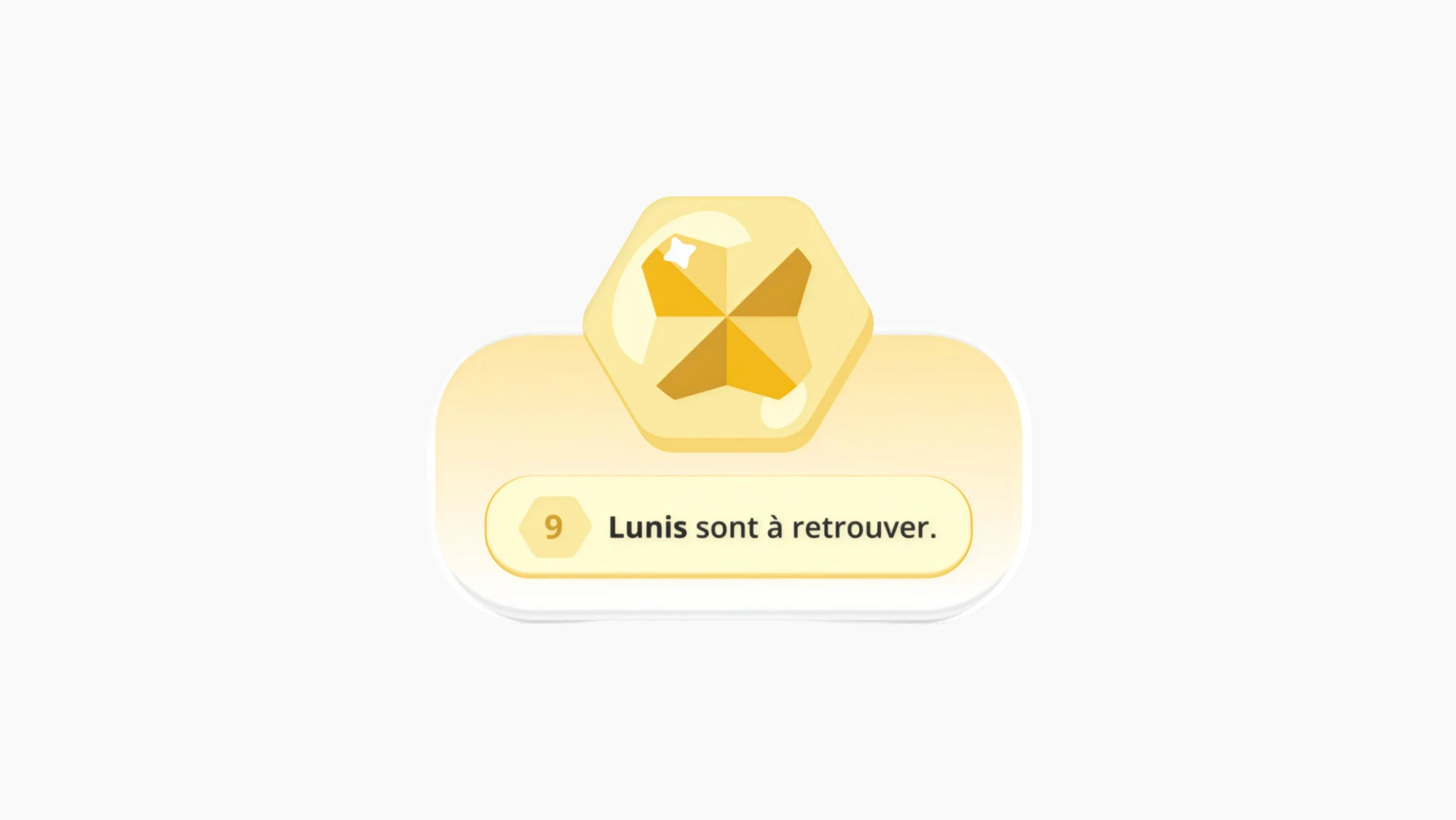
I wanted a real book, not a Word document with a cover page: laid out in InDesign, in A5, with the care I'd give a product, because a text arguing that form shapes behavior shouldn't ignore its own argument. And the Bonus chapter hides a joke: mini-games, with tokens scattered through the pages. A thesis about gamification that quietly gamifies its own reading, pushing the reader to come back and leaf through the book.
What I take from it
My answer fits in one idea: the same mechanics can serve people or exploit them, and what separates the two is the goal they are built for.
A streak that helps someone keep a habit they chose is not the same thing as a streak that keeps them in an app they wanted to leave. So the designer's responsibility starts with a simple question: what does this metric reward, and would the user choose it knowingly? It is the question I try to keep asking, on my own projects too.
The thesis is a snapshot: my thinking has moved since, and so has the field. But the questions it asks are still current, and its examples, Instagram, Snapchat, Duolingo or Spotify, make them concrete and make you want to look at the apps we open every day differently.